Employee Disability Rights in North Carolina
Your back has been hurting for weeks, and you finally decide to ask your supervisor if you can use a stool at your station—standing for a full shift just is not going to work for a while. She says she will get back to you, but one week goes by, then another. You follow up. This time she tells you that standing is part of the job—and if you can not do it, you might need to find a new place to work.

Rich Gittings
Published from North Carolina Legal Services
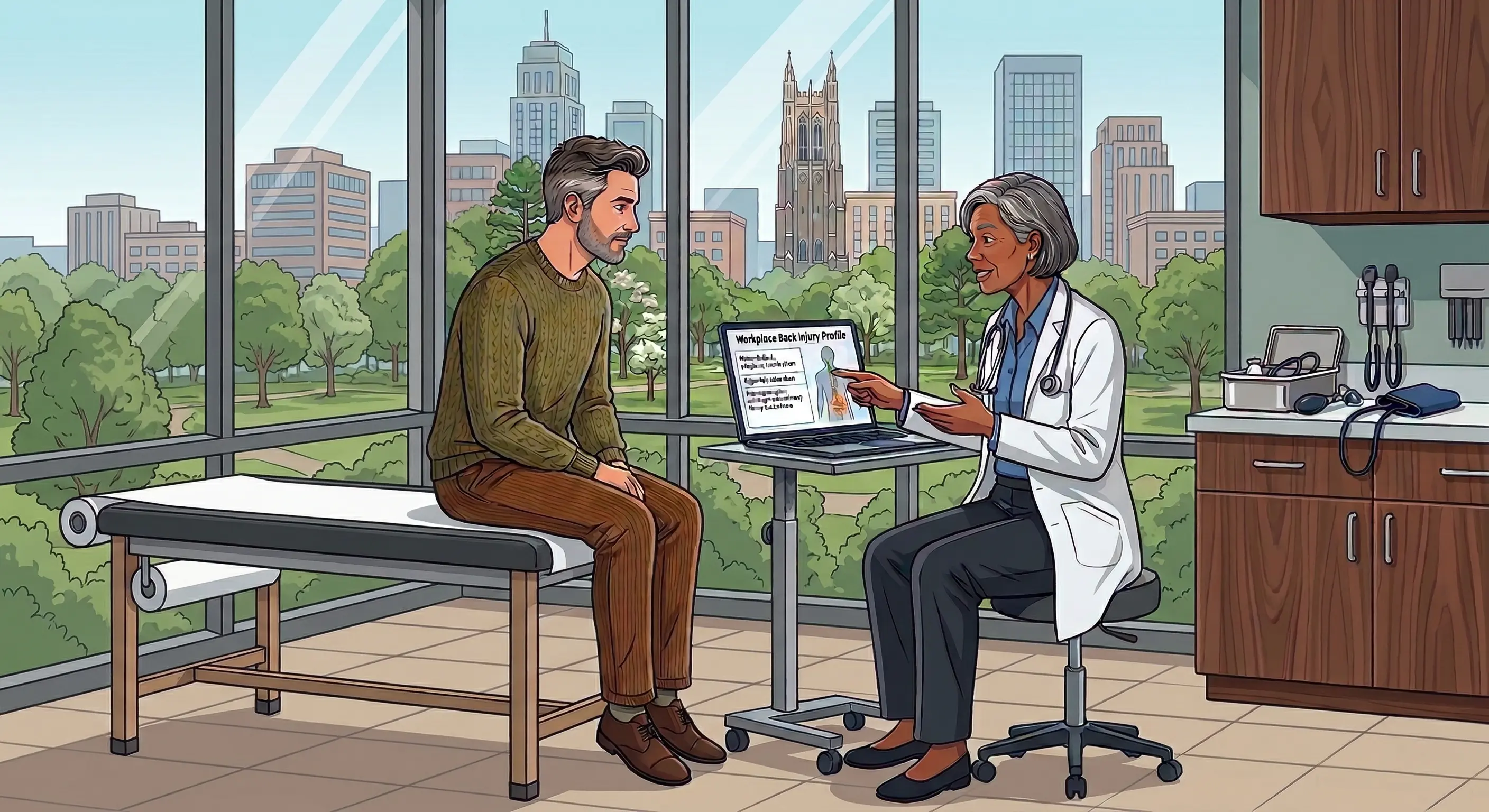
Your supervisor is wrong—under federal and North Carolina law, your employer is required to work with you to find a way to let you work, so long as doing so doesn’t create an unreasonable burden on your employer. They’re not doing you a favor, it's your right as a worker.
And you don’t have to ask perfectly, or jump through a bunch of hoops to invoke that right. There are no magic words you need to say or special forms or processes you have to fill out in order to trigger your employers obligations to accommodate you. This post will tell you what your rights are, common things employers get wrong, and what you can do to protect yourself at work.
Does Employee Disability Apply to Me?
Your condition doesn't have to stop you from working. What matters is whether it makes the work harder without support—a stool at a cash register, time off to see a doctor, a different workstation setup. Employers provide these kinds of changes every day.
The key question is whether you can still do the real work of your job with an adjustment. Not every task on a job description counts. Think about it this way: if your job is data entry and you develop carpal tunnel, the question isn't whether you can also carry boxes to the mailroom. It's whether you can do the data entry—and whether it's practical for your employer to make that possible.
The most important thing to remember is this: if you can perform the essential core duties of your job—even if you need a little help or a change in routine to do it—you are a qualified individual protected by law (N.C. Gen. Stat. §168A-3)
Don't wait for your condition to become a crisis. The law protects you as soon as the limitation exists (42 U.S.C. §12102)—not after you've been written up for performance issues no one knew were connected to a medical condition.
How to Request For Accommodations
You don't need a formal letter or a specific form. You need to tell your employer that a medical condition is affecting your work and you need something to change—whether you're in your first week or your tenth year.
That can sound like:
- "My doctor says I need to limit standing—can we figure out a different setup for my station?"
- "I have treatment appointments on Tuesdays—can we adjust my schedule?"
- "My condition is making the current setup hard—I'd like to talk about options."
Each time you talk to your employer about your accommodation, send a follow-up email and bcc your personal address. You'll want these saved in case you ever need to prove what you asked for and when.
What Your Employer Can Do
Your employer doesn't have to grant every request. They can say no if an accommodation would be too expensive or too difficult to implement, or if it would eliminate the essential duties of the job.
They can also ask for documentation from your doctor—but they're only entitled to a short letter about how your condition affects your work. They don't get to know your condition unless you want to tell them, and you probably shouldn't. The more information you provide, the more likely you are to have something used wrongfully against you or in ways you won't see. Call your doctor's office to make sure they're not sending over more information than they need to and that you're comfortable with having disclosed. Once it's sent, you can't take it back.
Here's where it gets abused: By law, your employer must provide these changes unless it would cause an "undue hardship" (a significant difficulty or expense) for the business (42 U.S.C. §12112(b)(5)).What counts as too expensive or too difficult depends on the employer's size and resources. A 500-person company claiming it can't adjust your schedule has a very different burden than a five-person shop. Think about it this way: if your job requires heavy lifting and your condition limits that, your employer doesn't have to remove all lifting. But if a dolly, a back brace, or a different rotation would let you do the work safely—that's a reasonable accommodation, and refusing to explore it is where the law gets broken.
Most HR departments aren't staffed or trained for this. The person handling your request may not know what the law requires. That doesn't excuse the violation—your rights don't depend on whether HR got adequate training—but it explains why so many requests stall.
Whether your request is denied or simply ignored, and whether it was deliberate or because of a lack of training, get it on the record. If your request is denied, send an email to the person you spoke with: "I'm following up on our conversation about my accommodation request. I asked for [X], and I was told my request is being denied because of [Y]. Is there anything I can do to appeal this decision?" Don't be confrontational—your goal isn't to win an argument, it's to create a record.

What Your Employer Can't Do
Before making you a job offer, an employer generally cannot ask about medical conditions. They can ask whether you can do the job with or without accommodation. After a conditional offer, they can require a medical exam—but only if everyone in that job category faces the same requirement.
Don't volunteer medical information before you have an offer. You're not required to, and it creates the possibility that a hiring decision was shaped by information the employer shouldn't have had.
What Your Employer Must Do
Once you ask, your employer is required to work with you on a solution (29 C.F.R. §1630.2(o)(3))—a modified schedule, accessible equipment, reassigned non-essential tasks, medical leave, remote work. Whatever lets you keep doing the job. The point isn't to remove the real work. It's to make it possible.
When you meet to discuss the accommodation, don't minimize your condition to seem cooperative. Don't say "it's not that bad most days" or "I could probably manage without it"—that kind of language can end up in your employer's notes and justify a denial.
Before the meeting begins, you should know what your limitations are and what you need to be able to do your job. You don't have to know how it will be provided. For example, if you need to work in a dark room for migraines, that's what you need to discuss with your boss, and it is their job to see if they can provide you with that accommodation. It isn't your job to find solutions, just to express what you need.
Disability Discrimination and Retaliation
Disability discrimination is when your employer treats you worse because of a medical condition. It doesn't always mean being told "we don't hire people with disabilities"—sometimes it looks like being passed over for a promotion you were qualified for, or being moved to a less desirable shift after disclosing a condition, or having your responsibilities quietly reduced so the company can justify eliminating your position later.
Retaliation is when your employer punishes you for asserting your rights. It doesn't require anything as overt as being fired the day after you file a complaint. Sometimes it looks more like your employer enforcing rules against you more strictly than your colleagues after you requested accommodation, or suddenly documenting minor issues that were never mentioned before.
When you're being mistreated at work, or treated differently than your peers—whether it is discrimination because of your disability or retaliation because you asked for help—it is illegal.
If you're being written up for things that were never a problem before, your hours get cut, you're being left out of meetings that you used to attend—or if anything else happens that makes your job worse or more unpleasant—it might be time to talk to an attorney. You likely need to prepare either to be fired or to take action to prevent yourself from being wrongfully terminated.
Keeping Your Own Records
You need to begin to collect records before you lose access to your email or other company systems. Forward any communications related to your accommodation or disability to your personal email—whether that is your request for accommodation, disparaging remarks, records of unequal treatment, or anything else that could later be used to support your claim of discrimination or retaliation.
If you are terminated, don't sign anything without having an attorney look at it first. It is common for employers to require terminated employees to sign an agreement to not sue them for wrongful termination in order to receive severance. In fact, getting you to sign that waiver may be the whole reason severance was offered in the first place.
For guidance on your options, visit our employment law services page. If your case may involve a hearing or legal proceeding, our guide to preparing for court without a lawyer explains the process step by step. When you're ready to speak with an attorney, learn how to prepare for your consultation to make the most of that time.
Frequently Asked Questions About Employee Disability Rights in North Carolina
What laws protect disability employment rights in North Carolina?
The Americans with Disabilities Act (ADA) and North Carolina’s Persons with Disabilities Protection Act both prohibit disability discrimination in employment, but they have different requirements. Starting a federal administrative complaint or lawsuit under the ADA or Rehabilitation Act generally prevents you from pursuing a state-law disability case based on the same facts. Get advice about which route fits your situation before filing, while keeping the filing deadlines in mind.
What is a reasonable accommodation?
A reasonable accommodation is any adjustment to a job, work environment, or hiring process that allows a qualified individual with a disability to: perform essential job functions, apply for a job, or access equal employment benefits.
Are employers required to provide reasonable accommodations?
Yes. Employers must provide reasonable accommodations unless it causes undue hardship, defined as significant difficulty or expense relative to the business size and resources. (42 U.S.C. §12112(b)(5))
What are common examples of reasonable accommodations?
Typical accommodations include: modified work schedules, remote or hybrid work arrangements, assistive technology or equipment, adjusted training materials or policies, and physical workspace modifications.
Do employees have to request accommodations?
Yes. The employee must initiate the request. The request does not need specific legal language but must clearly indicate that a disability exists and an adjustment is needed for work. Employers may request medical documentation if the disability is not obvious.
Can an employer deny an accommodation request?
Yes. A request can be denied if: it creates undue hardship, it removes essential job duties, or it is not supported by sufficient documentation. Employers must still attempt alternative accommodations through the interactive process.
Can an employer retaliate for requesting accommodations?
No. Retaliation is illegal under both federal and North Carolina law. This includes firing, demotion, reduced hours, or harassment after a request is made.
Do employers have to hire a person with a disability over other candidates?
No. Employers are not required to give preference. They must hire the most qualified candidate, but cannot reject someone solely due to disability if they are qualified.
What counts as disability discrimination in the workplace?
Discrimination includes: refusal to hire due to disability, termination based on disability, failure to provide reasonable accommodation, unequal pay or job assignments, and harassment related to a disability.
Are there limits to required accommodations?
Yes. Employers are not required to: provide personal-use items (glasses, hearing aids), remove essential job functions, lower performance standards, or violate safety requirements or seniority systems.
Does the law apply to job applicants?
Yes. Disability protections apply to: job applications, interviews, hiring decisions, and employment conditions and benefits.
What if the disability is not visible?
Non-visible disabilities are fully protected. Employers can request reasonable medical documentation to verify: the existence of a disability and the need for accommodation.
What is the interactive process?
The interactive process is a required discussion between employer and employee to identify a workable accommodation. (29 C.F.R. §1630.2(o)(3)) Both parties must communicate in good faith, share relevant information, and explore reasonable solutions.
Do small employers have to follow ADA rules?
The ADA applies to employers with 15 or more employees. North Carolina state law may apply more broadly depending on the situation.
When You Need a Lawyer
If your employer engages with your request and you reach a solution, this post gives you what you need. But if they refuse to engage, if the request triggers retaliation, if you're being pushed out, or if you've been terminated—legal representation changes what happens next. Sometimes just a letter from an attorney is enough to get things moving.
At North Carolina Legal Services, we handle disability accommodation disputes, workplace discrimination, and wrongful termination. If any part of this post describes what you're going through, schedule a consultation.
If you work with employees navigating disability accommodations—whether as an HR professional, social worker, union representative, or advocate—please share this resource. The more workers understand their rights, the less often employers get away with ignoring them.